Welcome to Good News Daily. Today is Sat Jan 03 2026


The project will also bring about job creation in the Langkloof region.
Implemented by the Gamtoos Irrigation Board on behalf of the Department of Environmental Affairs, the one-year National Resource Management project has employed 61 contractors and 800 workers to clear 950 densely populated hectares along the Diep River and its tributaries.
// Breaking news //#community #gamtoosvalley #kougadam #loveourvalley #patensie #watermanagement https://t.co/VLUul4y6NI
— Gamtoos Irrigation Board (@patensie) December 17, 2019
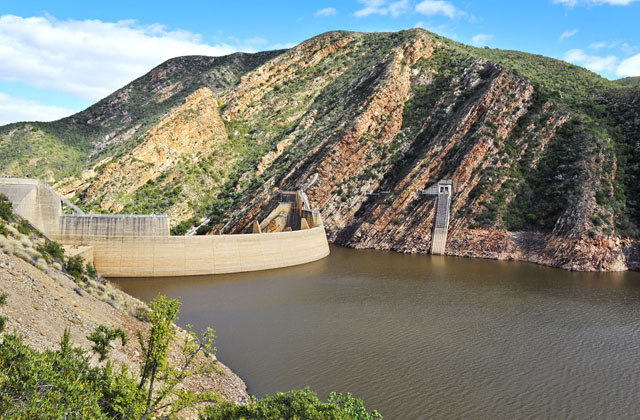
According to Gamtoos Irrigation Board area manager, Edwill Moore, eradicating these alien invasive species will bring some relief to the drought-afflicted region by increasing the flow of water into the Impofu Dam, as well as the Kouga and Churchill dams downstream.
“This ongoing drought has placed enormous pressure on our storage dams. Alien invasive trees – in this case, mainly black wattle – consume huge amounts of water, which would otherwise flow into these dams.
“Clearing alien invasive plant species is one of the most cost-effective ways of increasing our water supply.”
Edwill Moore
The Kouga Dam, a major supply dam in the region, now stands at 31% full, while extraction from the Impofu Dam, which is the second biggest, has been halted after its water level dropped to a critical 17.5%.
Moore said the contractors and their teams of 12 previously unemployed workers had been appointed from the local communities of Misgund, Louterwater, Krakeel, Joubertina and Kareedouw.
“We advertised for contractors in the Kou-Kamma municipal area. A community liaison committee – consisting of five ward councillors and two ward committee members per ward – assisted in shortlisting a pool of potential contractors.”
The Gamtoos Irrigation Board has called on private landowners to take a vested interest in the fight against alien invasive plant species, which are robbing the Eastern Cape’s supply dams of critical run-off from #rains: https://t.co/fMwvJMMveH pic.twitter.com/lC2rekO18g
— Farmbiz magazine (@farmbizmag) August 31, 2018
Moore said the successful bidders were then asked to appoint their own teams – on the condition the workers had to be drawn from the unemployment lists in the five wards.
Experts says that rainfall over large parts of the African continent have decreased drastically in 25 years, the number of weather-related disasters such as floods and droughts have also increased due to the effects of climate change. #sabcnews pic.twitter.com/8bYmXRs3E8
— Jayed-Leigh Paulse (@JayedLeigh) October 9, 2019
“Each team comprises three chainsaw operators to fell the trees along the riverbanks and three herbicide applicators to ensure that the stumps don’t grow back, assisted by two general workers. There are also two health and safety reps to maintain a safe working environment, and a pair of first aiders in case of an injury on duty.”
In addition to specialist training, Moore said all participants received general life skills training such as HIV/AIDS counselling, substance abuse counselling and peer education.